Opal: October's Birthstone
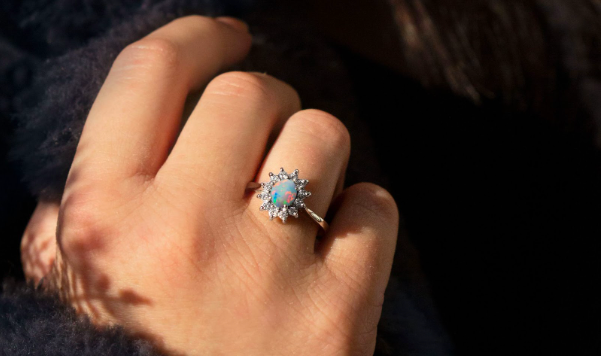
If you were born in October, you have two birthstones to choose from, tourmaline and opal. Opal is renowned for its rainbow spectrum of colours, representing hope, clarity and truth. It is also said to have healing properties, giving the wearer a better emotional balance, reducing stress and strengthening your memory.
Many myths have been associated with opals for centuries. Whether these stones fell from the sky during thunderstorms or opals were created from Zeus’ tears from beating the Titans, these are a few myths associated with this gemstone.
Here, we cover what you need to know about Opal, October’s birthstone.
Why are there two birthstones for October?
There are two birthstones for October because a network of American jewellery organisations suggested and approved a new standardised list of birthstones in 1952. Opal was considered to be more delicate with a feminine edge, so the decision was made to add tourmaline to the mix for a slightly more robust option.
Having two birthstones offers versatility, as opals are softer and romantic, while tourmaline is dynamic and fashion-forward. The dual-stone option means the wearer makes a statement tailored to their personality, whether it’s with the dreamy iridescence of an opal or the bold energy of tourmaline.
What colour is the birthstone of October?
With October’s double-act of birthstones, there is a colourful variety unlike any other. As both gemstones are available in different colours.
Opal
Opals are natural kaleidoscopes, displaying an iridescent dance of colours that shift and shimmer with every movement. This phenomenon, known as ‘play-of-colour’, occurs due to microscopic silica spheres that diffract light, creating internal rainbow colours making each opal truly one-of-a-kind. As opals belong to a mineraloid group, they don’t have a defined crystal structure; this is typically due to the environment of the gemstone where the water molecules and silica influence the formation.
The beauty in opals lies in their infinite variety across the location and environment in which they were formed. No two opals are alike. Some of the most sought-after opals include:
- White: The most common. It features light body tones with flashes of colour across the surface. Reflects pastel aesthetics that Greeks once thought were a window to the future.
- Black: The presence of carbon and iron oxide creates a monochrome, sometimes muted gradient. Its dark body tones dramatise the play-of-colour and accentuate any brightness and patterns, making it more valuable. Queen Elizabeth II often wore an Australian black opal brooch received as a wedding gift in 1947.
- Blue: Rare and enchanting like the mystic depths of the sea, thanks to its blue hues with flashes of green and purple from secondary copper inclusions. It’s also the national stone of Peru.
- Red-orange: Ranging from lemon to deeper crimson, these fiery opals look as though they captured your favourite sunset view or have erupted from roaring flames.
Each opal gemstone is unique in its intensity and pattern, which also depends on the size and arrangement of the gemstone.
Tourmaline
As a distinct gemstone species that forms within a host rock, tourmaline crystallises into long hexagonal prisms and displays in an extraordinary range of colours – sometimes several within a single stone, known as bi-colour tourmaline and referred to as the famous ‘watermelon’ variety for its bright green and pink combination. Ancient Egyptians believed that, because of this ability to manifest so many hues, the tourmaline gemstone must have journeyed through a rainbow during its creation. Scientifically, it’s a crystalline boron silicate mineral, enriched by trace elements such as iron, manganese and lithium present at the time of formation.
- Pink: With shades that dance from the soft blush of petals to the richness of ripe plum, pink tourmaline represents compassion and tenderness. Beloved for its ability to inspire creativity, the most sought-after examples include vivid violet and rose tones.
- Green: Long associated with renewal and protection, green tourmaline embodies courage and vitality. Its verdant hues mirror nature’s resilient and the steady strength of growth. It can be transparent, brilliant and clean.
- Blue: Can be known as indicolite. The rare and mesmerising Paraíba tourmaline, prized for its neon glow, sits among the world’s most coveted gems. Yet even gentle shades, like teal lagoons and berry-blue depths, carry a captivating beauty.
Black: With its profound, inky depth and grounding presence, black tourmaline is revered for shielding against negativity, cleansing one’s surroundings, and bringing harmony to the wearer’s world.
The Meaning of October’s Birthstone
Creativity, loyalty, love, passion and truth are all associated with the opal gemstone. It is believed if you wear an opal, it can protect you against illnesses, including fevers and infections.
Historically, Opals were poetically called the ‘Light of the world’ and ‘Queen of Gems’ as they were believed to possess all the characteristics of all gemstones as you peer into them and see their vast spectral colours. Europeans believed the gemstone was a symbol of truth, purity and hope. Ancient Greeks saw opals as a gift of prophecy and protected them from diseases. Opals have so many stories, tales and myths about this unique gemstone that create so much intrigue and reason to gift a loved one born in October with this incredible gemstone. Opals are also said to improve your confidence, self-esteem and self-worth, helping you realise your full potential.
Where is Opal Found?
Opals have been discovered in Brazil, Mexico and the Western United States. However, the vast majority of opals are found in Australia and it is their official national gemstone. New South Wales, Queensland and South Australia are the three states where opals are mined. White Cliffs and Coober Pedy are where most black and white opals are produced today.
How is Opal Formed?
Many opals are formed underneath the earth from a mixture of silicon dioxide and water. This process happens during the acidic weathering of rocks, this is caused when water runs down through the earth and the silica is picked up from the sandstone. It carries a silica-rich solution that runs into voids and cracks in the rock caused by decomposing fossils or natural faults. Over time, as the water evaporates the cycles keep repeating until the opal is formed.
What Colour is Opal?
Opals come in many different colours, depending on the location and environment where its produced. Some of the most popular opal colours include:
- White
- Black
- Grey
- Blue
- Red-Orange
Where is Opal Rated on the Mohs Hardness Scale?
Opal is rated between 5 and 6.5 on the Mohs Hardness scale, making it one of the most delicate gemstones you can buy for your jewellery.
This is why you must choose the setting for your opal gemstone wisely. Many opt for a bezel or rubover setting that surrounds and protects this precious gemstone. If you own a piece of opal jewellery, you must take care to avoid damaging the stone. You should avoid wearing an opal in extremely dry weather.
Rapid weather changes can cause an opal to crack. You should avoid taking opals on holiday and avoid water as water penetration can cause foggy cloudiness to appear. It means your opal stone will absorb the water, causing your opal to lose its fire temporarily or turn yellow or brown.
The colour and fire can return as your opal begins to dry out and you should see the fire return. However, we always advise you to avoid water to keep your opal in the best condition possible. You should store your opal jewellery in a padded cloth-lined bag or box if you plan not to wear your jewellery.
What are the meanings of October’s birthstones?
Across cultures and centuries, gemstones have carried powerful symbolism shaped by geography, tradition and the beliefs of those who cherished them. For October, two stones share the spotlight to embody this richness, diversity and personal meaning woven into the art of gemstones.
Opal
Traditionally referred to as ‘a precious stone’ in Sanskrit, ancient Romans later translated this to ‘opalus’. Europeans believed the gemstone was a symbol of truth, purity and hope, while ancient Greeks saw opals as a gift of prophecy and protected them from diseases. Historically, opals were poetically referred to as the ‘light of the world’ and ‘Queen of Gems’ as they were believed to possess all the characteristics of all gemstones as you peer into them and see their vast spectral colours associated with galaxies, fireworks and the depths of nature’s heat.
Opals are also said to improve confidence, self-esteem and self-worth, helping your special someone realise their full potential. Among its many tales and associations, the most remarkable of all is the story of your loved one.
Because of this intense association with flourishing and passion, opal is the stone given to celebrate an anniversary of 14 years, symbolising dedication and the journey both you and your partner have been on.
Tourmaline
Deriving from the Sinhalese (Sri Lankan) term ‘turmali’, this gem is a stone of mixed colours. Many other cultures across the world attach protective and charming capabilities to this gemstone, including Aboriginal Australian groups, Native Americans and African tribes. In ancient India, Tourmaline was said to reveal who or what was the cause of evil or trouble, while modern associations believe it keeps the digestive and circulatory systems healthy and provides protection, peace and compassion for wearers.
To explore the stories of other gemstones, view our guide Gemstones and their Meanings.
What Opal Jewellery Should I Buy?
Are you looking for the perfect opal ring or earrings? At Shining Diamonds, we understand the importance of making an informed decision about your jewellery purchase. While we offer loose opals online, we can create your dream piece of opal jewellery via our bespoke service in-store. Whether you want a pair of opal earrings, a pendant or an engagement ring, our team of skilled jewellers will make your opal jewellery piece become a reality.
Celebrate your October birthday in style by buying yourself opal or tourmaline jewellery from Shining Diamonds. Our diamond experts are here with you at every step of your October birthstone jewellery purchase. Discover your perfect opal stone by booking an appointment at our Brighton Lanes, Hatton Garden or Birmingham Jewellery Quarter showrooms today.
How to care for your opal and tourmaline jewellery
Here are our expert tips to care for your October birthstone accessories to ensure your jewellery looks as perfect as it did when you first tried the gemstones on.
Tourmaline
- Its durability (7-7.5 Mohs) makes it ideal for everyday wear.
- Resistant to most chemicals but avoid high heat and drastic temperature changes to prevent colour alterations or fractures.
- Clean with warm, soapy water and a soft cloth.
- Avoid ultrasonic and steam cleaners.
Opal
- A more delicate gemstone (5.5-6.5 Mohs), so store separately from your other jewellery, avoiding safes and storage options with a lack of humidity.
- Keep away from direct sunlight and sudden temperature changes.
- Remove before submerging in water, applying perfumes or oils, and sleeping.
Want to experience your October birthstone jewellery in person?
Step into our flagship Birmingham, London or Brighton showrooms and let the magic of October’s birthstones unfold before your eyes. Our Shining Diamonds jewellers will guide you to the jewel that feels like it was meant for you.