Why do some diamonds sparkle more than others
Diamonds are known for their glittering nature, but why do some diamonds sparkle more than others? Our guide explains the science behind what makes diamonds shine.
What is a diamond’s brilliance?
A diamond's sparkle is also known as its brilliance. The word originates from the French and Italian words for sparkling or shining. When gem cutters developed the round multi-faceted cut designed to maximise light return, they called it the brilliant cut. The sparkle it produced became known as brilliance, and gemologists later adopted the term as a technical term for sparkle.
A diamond's brilliance comes down to how light behaves when it enters, travels through, and exits the stone. Several factors determine exactly how sparkly the diamond appears.
Refractive index and total internal reflection
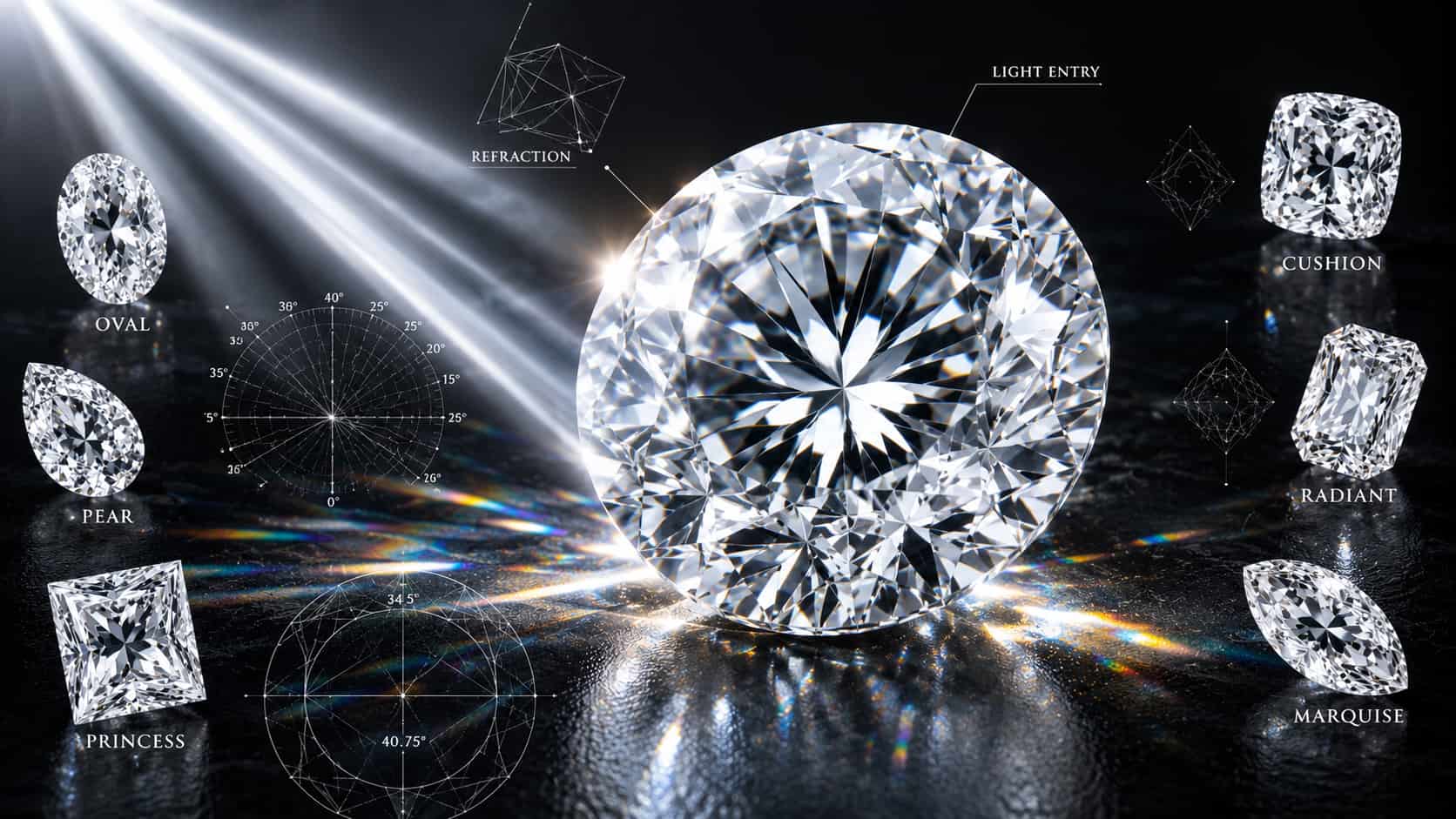
Diamonds have an exceptionally high refractive index of roughly 2.417–2.419, which means that light slows and bends sharply when it enters the stone. If the geometry is correct, the light hits the inner facet walls at an angle steeper than the critical angle (24.4 degrees) and reflects back out of the diamond rather than escaping through the bottom of the stone. This is known as total internal reflection, and it is the phenomenon that creates a diamond's sparkle.
Cut quality
Cut quality is the main factor controlling how sparkly a diamond appears. A well-cut diamond reflects light back through the table and crown. A shallow cut lets light leak through the pavilion, whereas a deeper cut misdirects light in the wrong direction.
Facet arrangement and symmetry
A round brilliant diamond consists of 57–58 facets, proportioned to bounce light through precisely calculated angles. The crown angle, pavilion depth, table percentage, and culet size all play a role in how brilliant the stone is.
Symmetry is important as the facets need to align correctly to bounce light off one another. When a diamond's facets are not symmetrical, light is scattered unpredictably.
Clarity
Inclusions and blemishes can interrupt the light's path as it travels through the diamond, resulting in reduced brilliance. However, this depends on the position and type of inclusion. For example, an inclusion right in the centre of the diamond will intercept more reflections than one at the edge of the stone, near the girdle. Feather and cloud inclusions scatter light, while needles and crystals can create dead zones inside the diamond.
Inclusions on the surface of the diamond also affect overall brilliance, diffusing light rather than reflecting it.
Cleanliness
Over time, you may find that your diamond jewellery loses some of its sparkle. This is likely due to surface contaminants coating the stone. Grease and oil from the skin can transfer to the surface and degrade light performance by reducing the contrast at the surface of the stone, making it appear dull.
Setting
Settings that allow the most light into the stone will produce the most brilliance. A cathedral setting, prong setting, or claw setting all hold the diamond up towards the light, maximising brilliance.
Shape of the diamond
A round brilliant diamond maximises the optical geometry for light return, which is why it outperforms fancy shapes in measurable brilliance. In a round brilliant diamond, the facets are arranged symmetrically in every direction. Because it has no elongated axis, every facet angle can be optimised equally around the entire circumference of the diamond.
Marquise, Oval and Pear Shaped
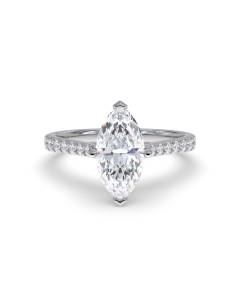
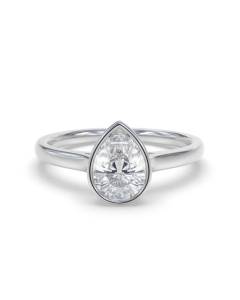
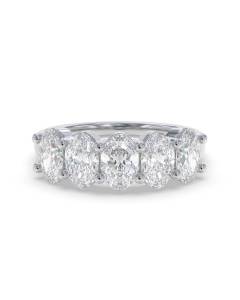
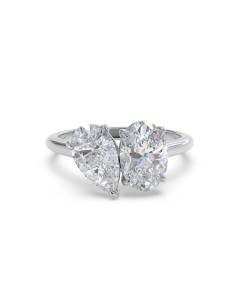
In elongated shapes such as the marquise, oval, or pear, the widest point of the stone requires a shallower pavilion angle to maintain the overall outline. The shallow angles mean that light escapes through the bottom of the diamond, creating a dark region known as a bow-tie effect rather than reflecting back out as sparkle. Every oval, marquise, and pear shaped diamond will have some degree of bow-tie effect, ranging from mild to severe.
Marquise, oval and pear shaped

Cushion Shaped
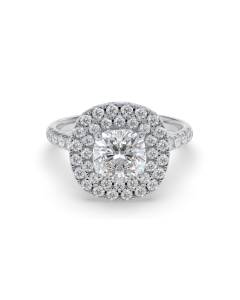
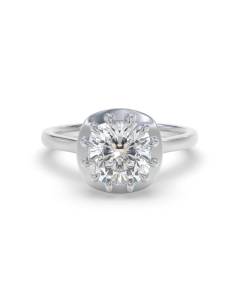
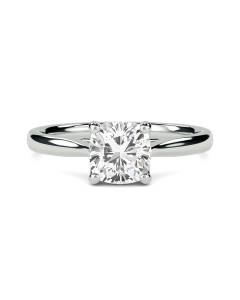
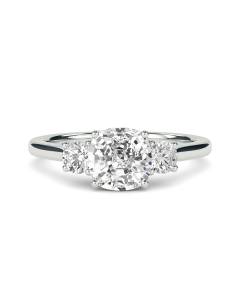
Cushion cut diamonds vary considerably in brilliance. Unlike round brilliant diamonds, there is no single cutting standard. Some cushion cut diamonds are cut with a crushed-ice pattern of many small facets, while others have larger facets that produce more defined reflections.
Cushion Shaped
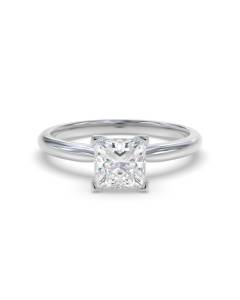
Princess Shaped
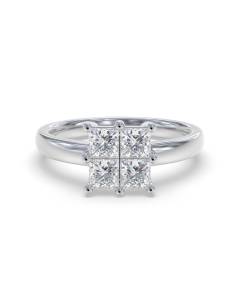
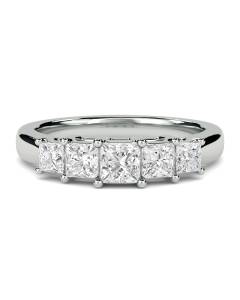
A princess cut is square with pointed corners and uses a different facet arrangement to the round brilliant diamond. It can achieve strong light return, but its sharp corners result in light leakage at the edges.
Princess Shaped

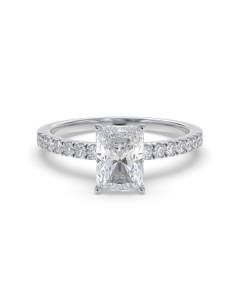
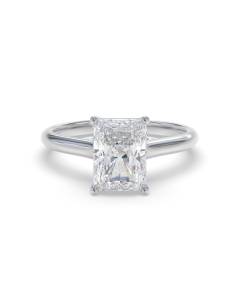
Radiant Shaped
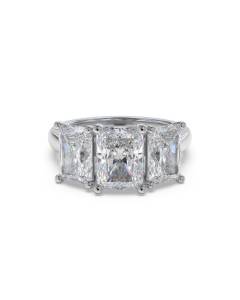
The radiant shape applies the facet pattern of a round brilliant diamond to a rectangular or square outline with cropped corners. This produces strong brilliance and sparkle; however, the rectangular shape does introduce some unevenness in light distribution that you would not get with a round brilliant cut.
Radiant Shaped

Which diamond delivers the most brilliance?
A round brilliant diamond was designed purely with optical performance and scintillation in mind. Every proportion is optimised for maximum light return. Choosing an excellent cut grade indicates that the stone has been cut for maximum brilliance, fire, and scintillation.
How can Shining Diamonds help?
Looking to maximise brilliance in your choice of diamond? Our experts team at Shining Diamonds can help you to choose the perfect stone. Or if you want more help and advice, simply contact us or drop into one of our stores to speak to a professional.