Where Do Diamonds Come From?
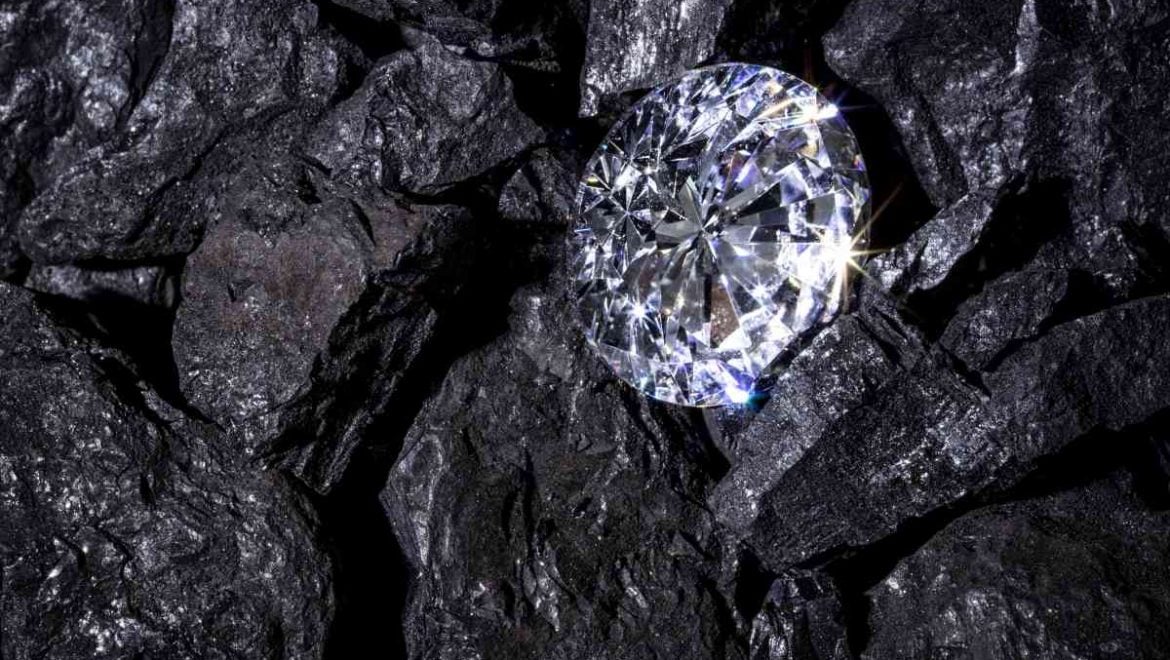
Diamonds are prized for their rarity and their trademark sparkle. But where do they come from, and what does that mean when you're buying jewellery? Our guide explains it all.
Where are natural diamonds found?
The largest global rough diamond supply is sourced in Africa, though the world's largest producer by volume is Russia. Historically, diamonds mostly came from India and Brazil, with world-famous diamonds such as the Koh-i-Noor and the Hope Diamond originating from India, and the 1,680-carat Braganza diamond from Brazil.
Naturally occurring diamonds are found on almost every continent, with mines in the following countries:
|
Continent |
Countries |
|
Africa |
Botswana, South Africa, Democratic Republic of Congo, Angola, Namibia, Zimbabwe |
|
Europe |
Russia |
|
North America |
Canada |
|
South America |
Brazil |
|
Australasia |
Australia |
How are natural diamonds formed?
Diamonds are formed over billions of years, with most forming between 1 and 3.5 billion years ago, making them among the oldest objects on the planet. Some diamonds are older than the Earth's continents, and others predate the earliest forms of life.
They are formed when carbon in the Earth's mantle, at a depth of 100–200 miles, reaches temperatures between 900 and 1,300 degrees Celsius and pressure of around 45 to 60 kilobars. Diamonds are then transported upwards by deep volcanic eruptions called kimberlite events, where molten rock rises rapidly from the mantle, carrying the diamonds along with it. In the wrong conditions, the carbon forms graphite instead.
How are lab grown diamonds made?
There are two main methods for creating lab-grown diamonds that mimic the conditions that form diamonds over billions of years.
HPHT (High Pressure High Temperature)
High pressure and high temperature replicate the conditions of the Earth's mantle in a machine. A small diamond seed is placed with carbon source material and a metal catalyst, then subjected to extreme heat and pressure. Carbon then dissolves, migrates onto the diamond seed and crystallises. The diamond grows layer by layer over a period of days or weeks.
CVD (Chemical Vapour Deposition)
A diamond seed is placed in a sealed chamber filled with a carbon-rich gas such as methane. The gas is then ionised using microwave energy, breaking the molecular bonds and allowing carbon atoms to attach to the seed and crystallise. Growth is more controlled due to the lower pressure.
Where do natural coloured diamonds come from?
Natural coloured diamonds are extremely rare, with only 0.0001% of all diamonds mined being coloured. As diamonds travel to the Earth's surface, they occasionally mix with trace amounts of other minerals. This can cause them to become coloured, and occurs when other particles become trapped during the crystallisation process. These diamonds begin as regular colourless diamonds that have been naturally coloured during their formation due to impurities, creating a remarkable natural phenomenon. In general, the strength of colour increases a coloured diamond's value. Some of the causes of coloured diamonds are as follows:
Yellow/Orange Diamonds
Although still rare, these are the most common coloured diamonds. They are caused by nitrogen atoms replacing carbon. The most common colour combinations of yellow diamonds are brown/yellow, green/yellow and orange/yellow. These combinations can affect the pricing of your diamond.
Blue/Green Diamonds
These are caused when the chemical element boron gets trapped during the crystallisation process. A naturally green diamond means that it has been near a radioactive mineral at some point during its formation.
Pink/Purple Diamonds
Pink or purple diamonds are considered the rarest of all coloured diamonds. Although these diamonds have been found in various mines around the world, scientists are still puzzled at the origin and cause of pink/purple diamonds. It has been speculated that this mysterious colour may be caused by the stress and strain experienced by diamonds when they are in the Earth’s mantle.
However, despite being more common, colourless diamonds are still the most popular type on the market.
If you are looking to purchase diamond jewellery today for yourself or a loved one, view our stunning selection today at Shining Diamonds today. Whether you are searching for a diamond engagement ring, a pair of earrings, a bracelet or a pendant, our shop in Hatton Garden has it all.
Here at Shining Diamonds, we can offer our expert advice to help you choose the perfect diamond. You can visit our jewellers across the country, book an appointment today.