Ultimate Guide to Pear Cut Engagement Rings

Pear-shaped diamonds exude femininity and elegance with their elongated shape, pointed tip and rounded end. They are one of the most popular diamond cuts, which has stood the test of time, and looking at our pear-cut diamond engagement ring collection, it is not hard to see why. They remain one of the most enduring fancy cuts, and our guide covers exactly what to look for when choosing a pear-cut ring you will treasure for life.
What is a pear-cut diamond?
A pear cut is shaped like a teardrop, pointed at one end and rounded at the other. It offers the brilliance of a round brilliant diamond on one end and an elongated marquise on the other. The long shape is flattering on the hand, making the finger appear slimmer and longer.
Choosing the ratio for your pear-cut diamond ring
Ratio is the diamond's length divided by its width at the widest point. It impacts the overall look, and no two pear cuts appear exactly the same.
-
Low ratios are 1.50 and under: creating a short and wide-shaped pear diamond.
-
Ideal ratios are between 1.60–1.75: a beautifully balanced, sparkly pear-cut diamond.
-
Higher ratios of 1.75 and over: a longer and slender pear, with less light and sparkle.
The right ratio is personal, so view the stones in person and consider the look against the price.
Choosing the cut quality
Cut quality will vary depending on the teardrop outline. There are three things to look for when choosing a pear-shaped stone.
-
Triangular shape: a flat back or sides will lose the stone's signature curve and dull the overall sparkle.
-
Sloping sides: a wide base will make the sides slope towards the tip rather than meet in a crisp point.
-
The bow tie effect: a dark shadow appears across the centre, which blocks light. Every elongated cut shows one, and lower-quality stones will show it more, so always check it in person.
Choosing pear clarity
Clarity grades the inclusions that are visible under 10x magnification. A pear cut is a good choice as it tends to make inclusions less obvious, particularly if they are near the upper girdle facets and away from the centre or the point of the diamond.
Clarity is graded as follows:
I3–I1 Clarity: Included stones can still be beautiful, but flaws are visible to the naked eye. The diamond may have a misty appearance and, in some cases, this impacts its sparkle. These inclusions reduce the cost of the diamond, making it more affordable.
SI2–SI1 Clarity: Slightly included diamonds have inclusions visible from certain angles to the naked eye. This is a more affordable option, especially if you want a larger carat weight or superior cut quality.
VS2–VS1 Clarity: Inclusions in very slightly included diamonds are only visible under 10x magnification or a jeweller's loupe. VS2–VS1 diamonds make a good choice for an eye-clean diamond that sparkles brightly without breaking the bank.
VVS2–VVS1 Clarity: This stands for Very Very Slightly Included. These diamonds contain minimal inclusions, visible only with a jeweller's loupe, and will be very difficult to detect. Diamonds in this category come with a higher price tag. The sparkle is remarkable, and it is very easy to fall in love with diamonds in this clarity grade.
IF–FL Clarity: If you are looking for perfection, then here it is: the top of the clarity scale. IF stands for Internally Flawless, meaning the interior of the stone will be inclusion-free. It is a showstopper and perfect when you want only the best for your loved one.
How much do pear cuts cost?
Pear-shaped diamonds typically cost 10–30% less than a brilliant round diamond of the same carat weight. This is due to:
Less waste: when a rough diamond is cut into a pear shape, less of the rough stone is removed, meaning you retain more diamond carat weight for your money.
Greater variation: round diamonds must follow stringent shape guidelines, whereas fancy shapes allow for a wider range of ratios.
Larger apparent size: the elongated shape shows more of the carat weight from above, so the stone looks larger than a round stone of the same weight.
Which setting should I choose for a pear-cut diamond?
There are several different settings available for a pear-cut diamond, each popular for its own reasons and qualities. Ultimately, the decision is yours, but below we explain which settings work best for your partner when choosing a pear-cut engagement ring.
Prong Setting Engagement Rings

Prong Setting Engagement Rings

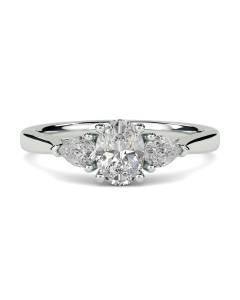
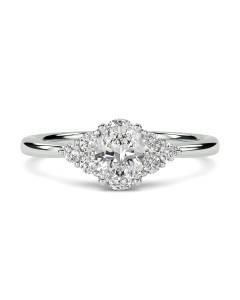
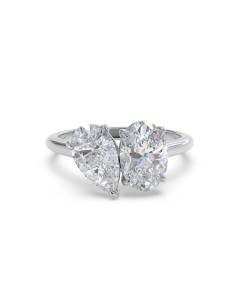
Prong setting
A prong setting is one of the most popular and versatile ring styles. As the most common type of setting used for engagement rings, it suits both modern and vintage styles.
When choosing a prong setting, ensure there is a prong holding the tip of the diamond to prevent damage from knocks and chips. If you opt for a larger carat weight, an arrow-shaped prong is a good choice to keep it secure.
Halo Setting Engagement Rings
Halo Setting Engagement Rings
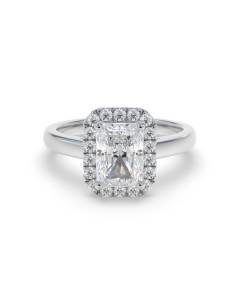
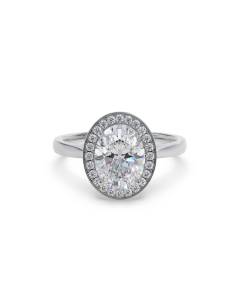
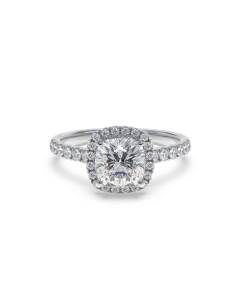
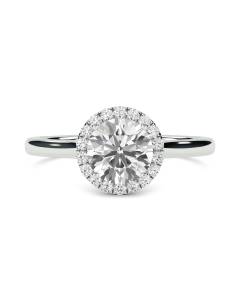
Halo setting
Smaller diamonds surround the centre stone, adding fire and brilliance and creating a larger apparent size. A hidden halo also works well, adding extra brilliance from the side.
Bezel Setting Engagement Rings
Bezel Setting Engagement Rings
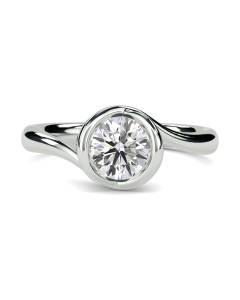
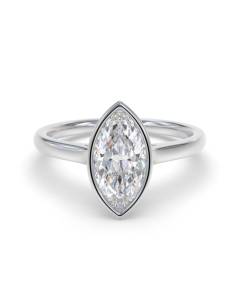
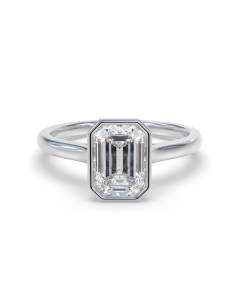

Bezel setting
A bezel setting is a sleek and modern choice for a pear-shaped diamond. It encases the stone for a classy and secure finish, making it ideal for everyday wear and hands-on jobs.
Which way should you wear a pear-shaped diamond ring?
Most people wear a pear ring with the tip pointing towards the fingernails. Worn this way, the elongated shape lengthens and slims the finger.
Pear-cut diamond rings from Shining Diamonds
Ready to propose with a pear-cut engagement ring? Here at Shining Diamonds, we provide a wide range of pear-cut diamonds to choose from. Choose from a variety of metals, including white gold, platinum and yellow gold, as well as various styles of ring, such as side-stones, halo or vintage rings.
Browse our pear-shaped engagement rings online now, or see just how beautiful these rings are in person by booking an appointment with our expert team today.