What is my birthstone?
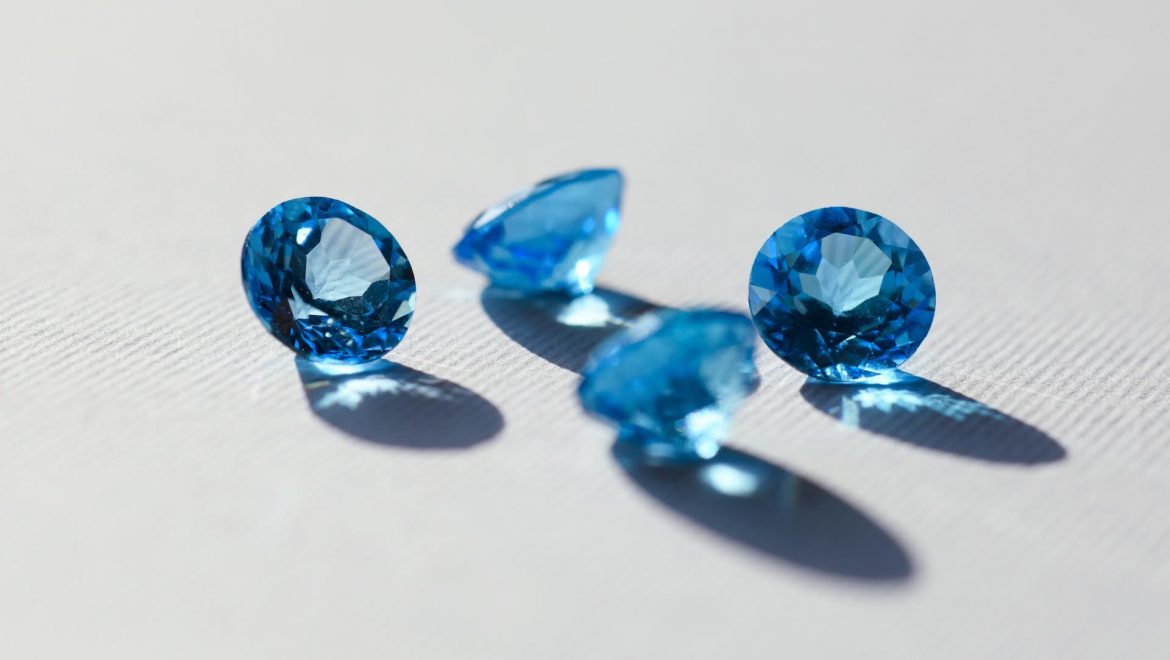
The list of birthstones as we know them today is a relatively new invention, only established by the GIA in 1912, then known as the American Jewellers Association. They're based on a historical list of birthstones that originated in Poland between the 16th and 18th centuries.
In this guide we'll provide you with a simple chart so that you can quickly find your birthstone or the perfect birthday gift for a loved one. We'll also explain each birthstone's properties and our top jewellery recommendations for each month.
Birthstone chart
|
Birth Month |
Stone |
Image |
|
Jan |
Garnet |
 |
|
Feb |
Amethyst |
 |
|
March |
Aquamarine |
 |
|
April |
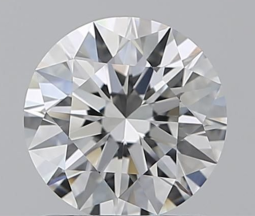
Diamond |
 |
|
May |
Emerald |
 |
|
June |
Pearl, Alexandrite,Moonstone |
 |
|
July |
Ruby |
 |
|
August |
Peridot |
 |
|
September |
Sapphire |
 |
|
October |
Opal, Tourmaline |
 |
|
November |
Topaz, Citrine |
 |
|
December |
Turquoise, Tanzanite, Zircon |
 |
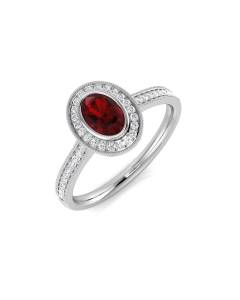
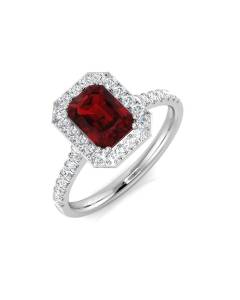
Birthstone for January: Garnet
Colour: Although this gemstone is traditionally thought to be red, it can actually come in almost every colour.
Properties: Garnets form in predictable shapes, and their internal structure is highly symmetrical. The most common shapes are trapezohedron and dodecahedron, which grow naturally under heat and pressure where garnet forms. This means that light passes through the garnet without splitting, which gives the stone a rich, even colour. Despite being on the lower end of the Mohs scale for wearable jewellery, it has almost no cleavage planes, which makes it less likely to fracture than other gems.
Hardness: 6.5–7.5 Mohs
Origin: Brazil, India, Madagascar, and the United States


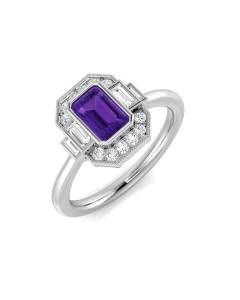
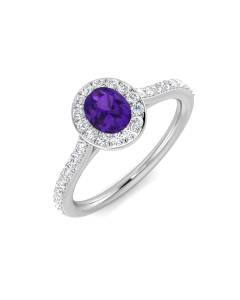
Birthstone for February: Amethyst
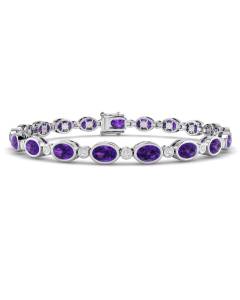
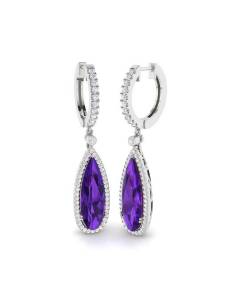
Colour: An amethyst is traditionally purple, but the shade can range from a pale lilac to a deep reddish purple. Amethysts are often prone to colour zoning.
Properties: An amethyst is doubly refractive, which means that light splits into two rays as it passes through the stone. This helps give the stone its glassy, translucent appearance.
Hardness: 7 Mohs
Origin: United States, Canada, Brazil and Zambia
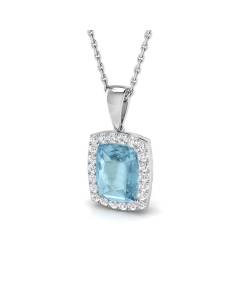
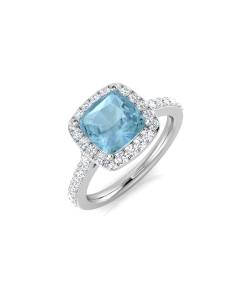
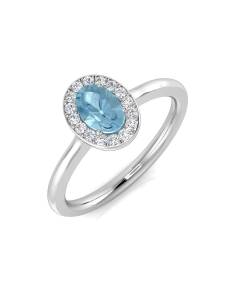
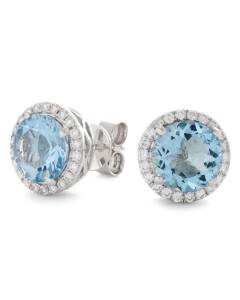
Birthstone for March: Aquamarine
Colour: Unsurprisingly, considering the name, an aquamarine is blue to blue-green, similar to the ocean.
Properties: Aquamarine is doubly refractive, so light splits into two rays as it passes through the stone. It is also slightly pleochroic, meaning it can show slightly different colours when viewed from different angles. The way it forms means that it is affordable at higher price points, making it an excellent choice for a statement piece.
Hardness: 7.5–8 Mohs
Origin: Brazil, Nigeria, Madagascar, Zambia, Pakistan, and Mozambique
Birthstone for April: Diamond
Colour: It may surprise you to know that diamonds come in a wide range of colours. The diamond is best known for its colourless appearance, which ranges from completely colourless to a yellow tint. It also comes in black.
Properties: A diamond is best known for its hardness, but it also has many other unusual properties, such as its thermal conductivity, which conducts heat better than any other material. It has a high refractive index and high dispersion, which creates its signature sparkle and rainbow flashes.
Hardness: 10 Mohs
Origin: Australia, Botswana, Canada, South Africa and Russia
Birthstone for May: Emerald
Colour: An emerald in its purest form is a rich green, but the stone can range from anywhere between yellow-green to blue-green.
Properties: An emerald is best known for its striking colour. Its most sought-after properties are its internal flaws, known as "Jardin," which prove its natural origin.
Hardness: 7.5–8 Mohs
Origin: Colombia, Brazil, Afghanistan and Zambia
Birthstone for June: Pearl, Moonstone and Alexandrite
Pearls
Colour: Pearls come in a range of colours, from the standard white to the more rare and exotic black Tahitian pearls and pink conch pearls.
Properties: Pearls are known for their iridescent overtones and ability to reflect light. Unlike other gemstones, pearls are formed inside molluscs. They are relatively soft compared to other everyday jewellery, and represent purity and innocence.
Hardness: 2.5–4.5 Mohs
Origin: China, Australia, Philippines and Indonesia
Moonstone
Colour: Moonstone is composed of microscopic layers that scatter light. Thinner layers of moonstone appear blue, whereas thicker layers look whiter.
Properties: A moonstone has an adularescence quality which gives it its characteristic moon-like glow. It has a reputation for clairvoyance and unlocking psychic abilities for the wearer.
Hardness: 6–6.5 Mohs
Origin: Sri Lanka, India and Australia
Alexandrite
Colour: The alexandrite is unlike any other stone and changes colour depending on the light. In daylight it is green, but in incandescent light it is red.
Properties: Natural alexandrite is extremely rare and valuable. It is named after Czar Alexander II of Russia, who ruled the country in the 1830s when the stone was first discovered.
Hardness: 8.5 Mohs
Origin: Sri Lanka, East Africa, Brazil
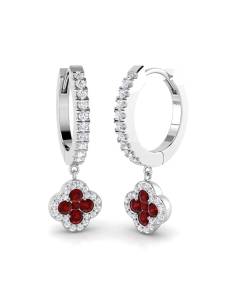
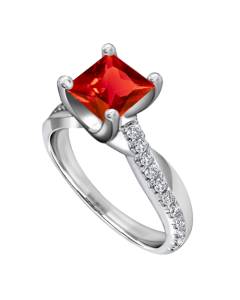
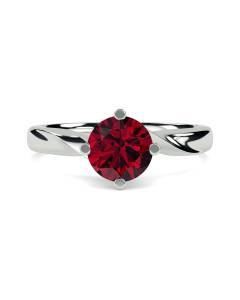
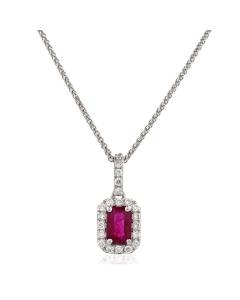
Birthstone for July: Ruby
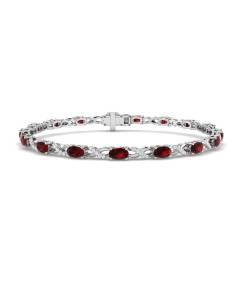
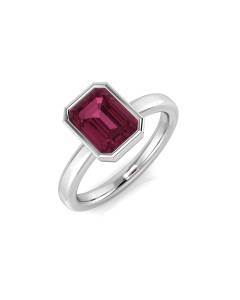
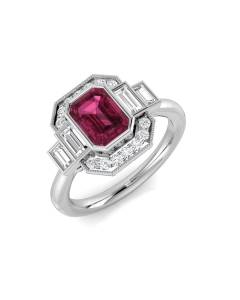
Colour: A ruby is known for its deep, rich red colour. Rubies have a variety of undertones, including pink, orange, purple and brown, as well as the red they are known for.
Properties: Flawless natural rubies are incredibly rare. Most rubies contain tiny inclusions known as silk, as they replicate the appearance of silk fabric. As well as being July's birthstone, the ruby is also traditionally given for 15th and 40th wedding anniversaries.
Hardness: 9 Mohs
Origin: Burma, Vietnam, Thailand, India, Middle East, East Africa and the United States
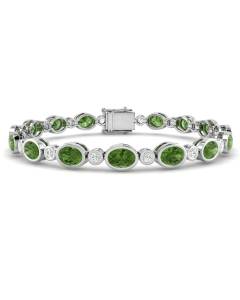
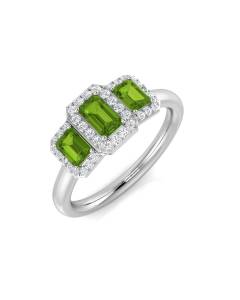
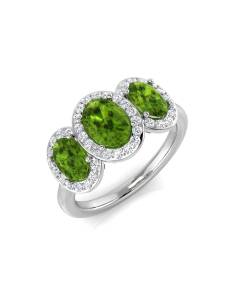
Birthstone for August: Peridot
Colour: A peridot can be any shade of green, from deep, woodland-esque greens to brighter, lime-like greens. The colour depends on the iron content of the stone.
Properties: It also has double refraction, which means that when light passes through the stone, it bends and splits, creating a sparkling glow in all light conditions. This light quality is one of the reasons it was known as the "gem of the sun."
Hardness: 6.5–7 Mohs
Origin: Arizona, China, Myanmar, Pakistan and Africa

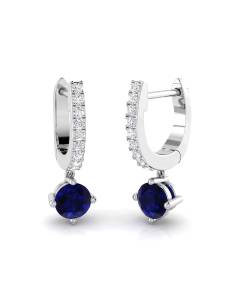
Birthstone for September: Sapphire
Colour: Sapphires are traditionally thought of as blue, and although blue is certainly the most popular, sapphires can actually be every colour except red. When the sapphire mineral corundum is red, it is classified as a ruby.
Properties: Sapphires have a high refractive index and excellent lustre, which gives them their signature sparkle. They are second in hardness to diamonds, which makes them an excellent choice for everyday jewellery.
Hardness: 9 Mohs
Origin: Kashmir, Burma, Sri Lanka, Thailand, Vietnam and India


Birthstone for October: Opal and Tourmaline
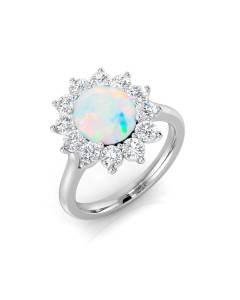
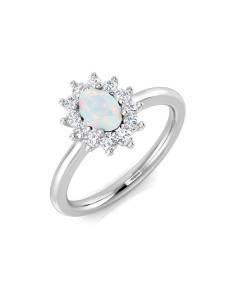
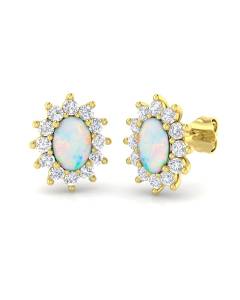
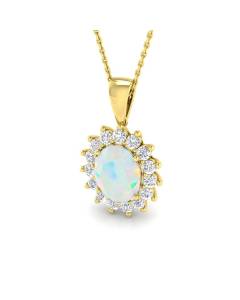
Opal
Colour: An opal comes in a variety of colours including, but not limited to, colourless, white, yellow, orange, red, green, blue, black, grey and violet. There are also precious opals, which display a kaleidoscope of colours.
Properties: Surprisingly, opals contain between 3% and 21% water by weight and lack a fixed chemical structure. They also have a pseudochromatic optical effect, which results in flashes of coloured light.
Hardness: 5.5–6.5 Mohs
Origin: Australia, Brazil, Honduras, Ethiopia, and Czech Republic
Tourmaline
Colour: The tourmaline gemstone is most traditionally known for being green; however, it can be a variety of colours, from black to pink. Those that transition from green to pink are quite aptly called the watermelon tourmaline.
Properties: Tourmaline has a number of unique properties. When exposed to light, it shows different depths of colour. It also generates an electrical charge when subjected to pressure or friction, and holds an electric charge when exposed to heat.
Hardness: 7–7.5 Mohs
Origin: Brazil, Sri Lanka, Nigeria, Mozambique, Madagascar, Afghanistan, Pakistan and the United States

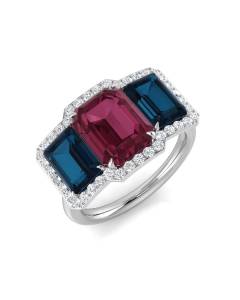
Birthstone for November: Topaz and Citrine
Topaz
Colour: We normally associate topaz with the rich orange of Imperial Topaz; however, pure topaz is actually colourless. It is impurities in the stone that give it its colour.
Properties: Topaz is said to promote joy, happiness and abundance. Historically, any yellow gemstone was referred to as topaz, but modern methods of identifying gems mean that this is no longer the case. Topaz has a low refractive index, so it does not sparkle as much as other precious gems.
Hardness: 8 Mohs
Origin: Brazil, Pakistan, India, Sri Lanka, Russia, Nigeria, Germany, and the United States
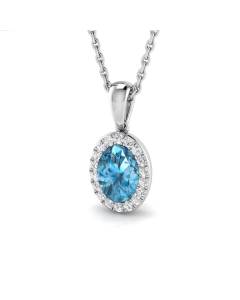
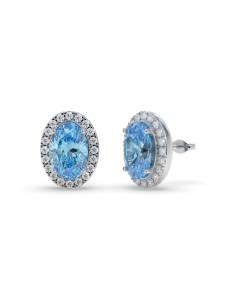
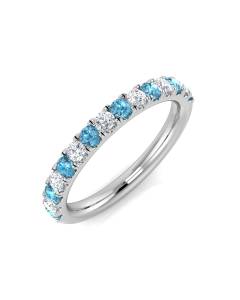
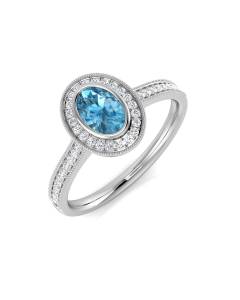
Citrine
Colour: Citrine, much like its traditional birthstone counterpart, is yellow to red-orange in colour. It can be a deep orange and, in some cases, even an orangey brown.
Properties: Known for its sunny energy, citrine is a type of quartz reminiscent of citrus fruits. It is believed to attract prosperity and financial success.
Hardness: 7 Mohs
Origin: Brazil, Africa, Madagascar, France, and the United States
Birthstone for November: Tanzanite
Colour: A good-quality tanzanite is a deep royal blue or violet colour. Lower-quality tanzanites can be slightly lighter in colour.
Properties: Tanzanite displays different tones when exposed to light and has a strong, intense colour. As it is only found in a few places around the globe, it could run out within a few decades, making it both rare and valuable. It is a relatively new precious gem, as it was only officially discovered in the 1960s.
Hardness: 6.5–7 Mohs
Origin: Tanzania
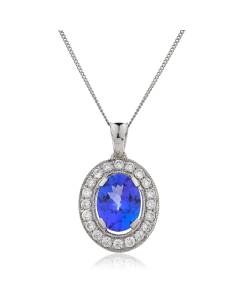
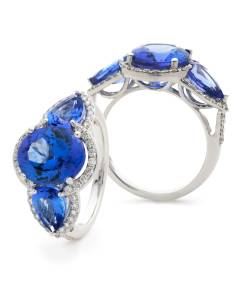
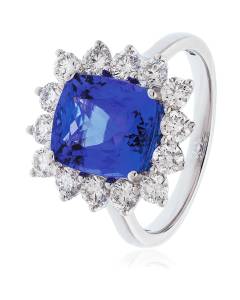
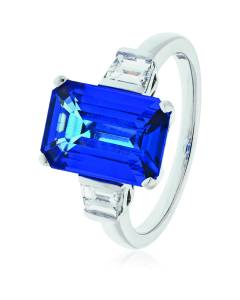
Whether you're looking for the perfect gift for a loved one, or want to make a proposal extra special by choosing a meaningful birthstone, let us help you. We have showrooms around the country, and our knowledgeable team is always here to help. Alternatively, you can browse our range of gemstone jewellery to find the perfect piece.