How can you tell if a diamond is real?
Whether you've been gifted a piece of jewellery, inherited one, or picked up a second-hand bargain, you might feel the need to identify the stones and confirm whether they're genuine diamonds. In our guide, we'll explain how to check at home before bringing it into a professional.

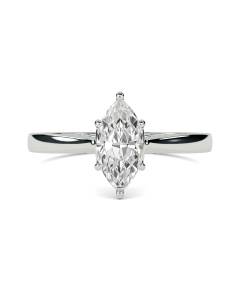
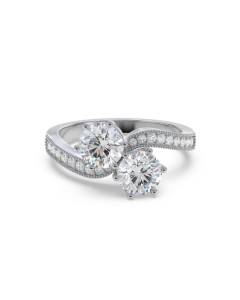
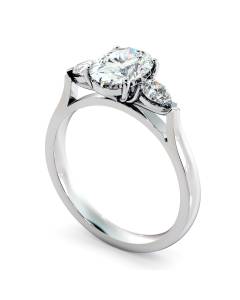
How to tell if a diamond is real at home?
There are a number of simple tests you can do at home to verify whether your diamond is real. Be aware that if the stone you're testing is not a diamond, some of these methods could potentially damage it, so your safest bet is to bring the jewellery into a professional jeweller to verify.
The fog test
The most well-known method of testing whether your diamond is genuine is the fog test. It takes no equipment, risks no damage, and is quick and simple to do. Simply breathe on the stone in the same way you would to fog up a glass or mirror. The fog from your breath should disappear almost immediately if it's a genuine diamond. If the stone is made from glass, cubic zirconia or crystal, the fog will stay on the stone for longer. This test works best with a clean, dry stone, so it's best to polish it with a lint-free cloth before you start.
The water test
The water test only works with a loose stone, so if your diamond is set into jewellery, this method won't work.
Fill a glass with water and drop in the loose stone. The diamond should sink rapidly and sit firmly on the bottom of the glass. Glass and other synthetic stones are less dense, so they take longer to sink, or in some cases even float. This method isn't 100% reliable, as some fakes are purposefully made denser so that they'll sink regardless.
The newspaper test
Again, this test only works on a loose stone, as you need to be able to see through it in its entirety. Place the stone flat-side down on a page of a newspaper that has small printed text, such as a news article. Then look down through the diamond from above. One of the main attractions of a diamond is the sparkle caused by its unique refractive index. Diamonds refract light at such a steep angle that nothing on the page should be readable. If the text breaks up into scattered light it is a real diamond. If you can read the text through the stone, it is almost certainly glass, crystal or cubic zirconia.
The mirror test
The mirror test is quite well known but can be unreliable. It works on the principle that because diamonds are the hardest material on the Mohs scale, nothing can mark them, but they can mark almost anything else. If you run the diamond across a mirror, it will leave a mark if it's genuine, and remain unmarked itself.
There are two main issues with this method. The first is that any hard gemstone will mark a mirror, not necessarily just diamonds. The second is that although diamonds are hard on the Mohs scale, they are not completely indestructible. Scratching a diamond ring across a mirror with enough force could put pressure on the ring's setting, which could chip or loosen the stone. Additionally, damaging a mirror for something that could turn out to be glass or cubic zirconia is a lose-lose situation.
Checking under magnification
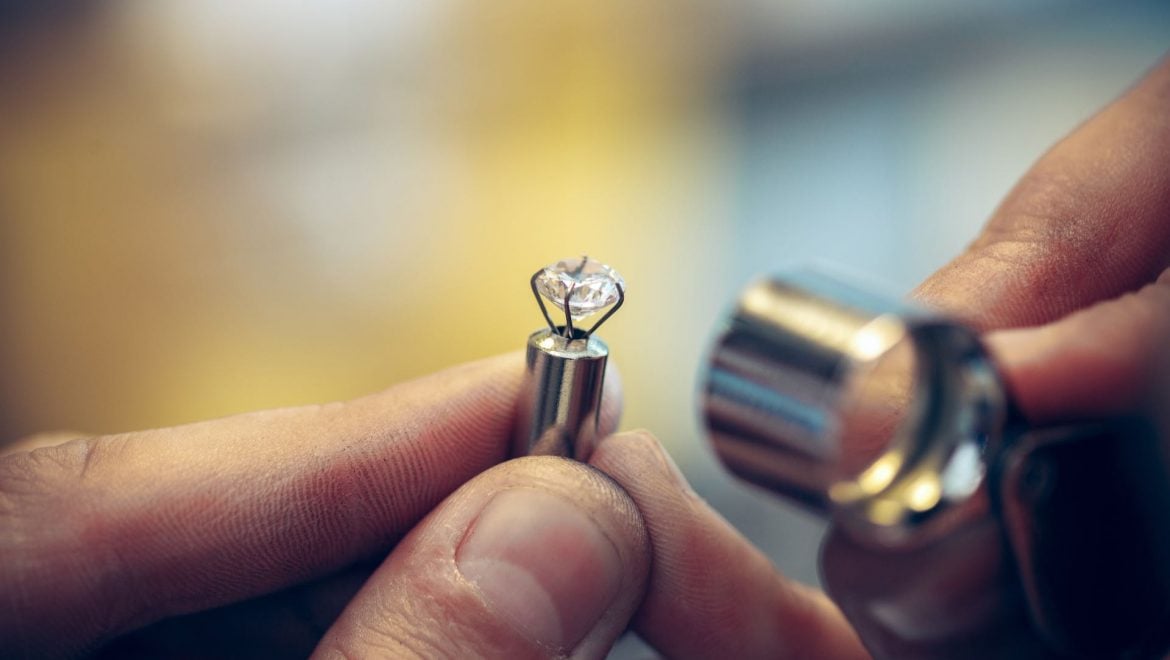
Using a magnifying loupe or even a high-magnification camera lens can allow you to see the signs of a real diamond. While a small number of diamonds are genuinely inclusion-free, most will show a trace of the formation process in the form of small marks known as inclusions.
What next?
While these methods can give you an idea of whether your stone is real or fake, they're not completely foolproof. The best way to verify what stone you actually have is to take it into a jeweller for professional testing, where they will use equipment to test the stone's thermal and electrical conductivity.
Certified diamonds
If you're buying a new piece of diamond jewellery over 0.3ct, we recommend making sure it comes with a certificate. The leading gemological laboratories are GIA (Gemological Institute of America) and IGI (International Gemological Institute), but for a reliable certification you can also choose a certificate from Shining Diamonds, which is verified by GIA-qualified gemmologists.
If you need more help choosing the right diamond for you, simply contact us or drop into one of our stores to speak to a professional.